
Understanding Divorce Rate Trends: Why Are Divorce Rates Increasing?

Divorce is a life-changing event that brings a mix of emotions and challenges. If you are thinking about divorce or are already navigating this path, you might wonder about the bigger picture. Why do so many marriages end? Are divorce rates really rising? Understanding the trends can help you feel less alone and more prepared for what lies ahead.

Divorce Rate Trends: What the Numbers Tell Us
Divorce rates have fluctuated over the decades, influenced by social, economic, and cultural shifts. In recent years, many have asked, are divorce rates increasing, and the answer is nuanced.
Historical perspective: Divorce rates in the United States peaked in the late 1970s and early 1980s. Since then, the overall rate has slightly declined but remains significant.
Current trends: Recent studies show that while younger generations tend to marry later and divorce less, some demographics still experience higher divorce rates.
Impact of the pandemic: The COVID-19 pandemic brought unique stressors, leading some couples to reconsider their relationships, while others found new strength.
Understanding these trends can help you see your situation in context. Divorce is not a failure but often a step toward a healthier, more fulfilling life.

Why Are Divorce Rates Increasing for Some?
While the overall divorce rate may not be skyrocketing, certain factors contribute to increases in specific groups or regions. Here are some reasons why divorce rates might be rising for some couples:
Changing societal norms: Divorce is less stigmatized today, making it easier for people to leave unhappy marriages.
Financial independence: More women have financial resources and careers, giving them the freedom to make choices that prioritize their well-being.
Communication breakdown: Many couples struggle with communication, leading to unresolved conflicts.
Stress and mental health: External pressures like job loss, health issues, or parenting challenges can strain relationships.

If you find yourself asking, are divorce rates increasing in your community or age group, it’s helpful to look at these factors. They might resonate with your experience or help you understand your partner’s perspective.
What are the four behaviors that cause 90% of all divorces?
Research has identified four key behaviors that contribute to the majority of divorces. Recognizing these can help you reflect on your relationship and decide what steps to take next.
Criticism: Constantly finding fault or attacking your partner’s character.
Contempt: Showing disrespect through sarcasm, name-calling, or eye-rolling.
Defensiveness: Responding to complaints with denial or counterattacks instead of listening.
Stonewalling: Withdrawing emotionally or physically to avoid conflict.

The image highlights how criticism, contempt, defensiveness, and stonewalling contribute to 90% of all divorces, underscoring the importance of addressing these behaviors for healthier relationships.
These behaviors create a toxic cycle that erodes trust and connection. If you see these patterns in your relationship, it might be time to seek support. Remember, change is possible with awareness and effort.
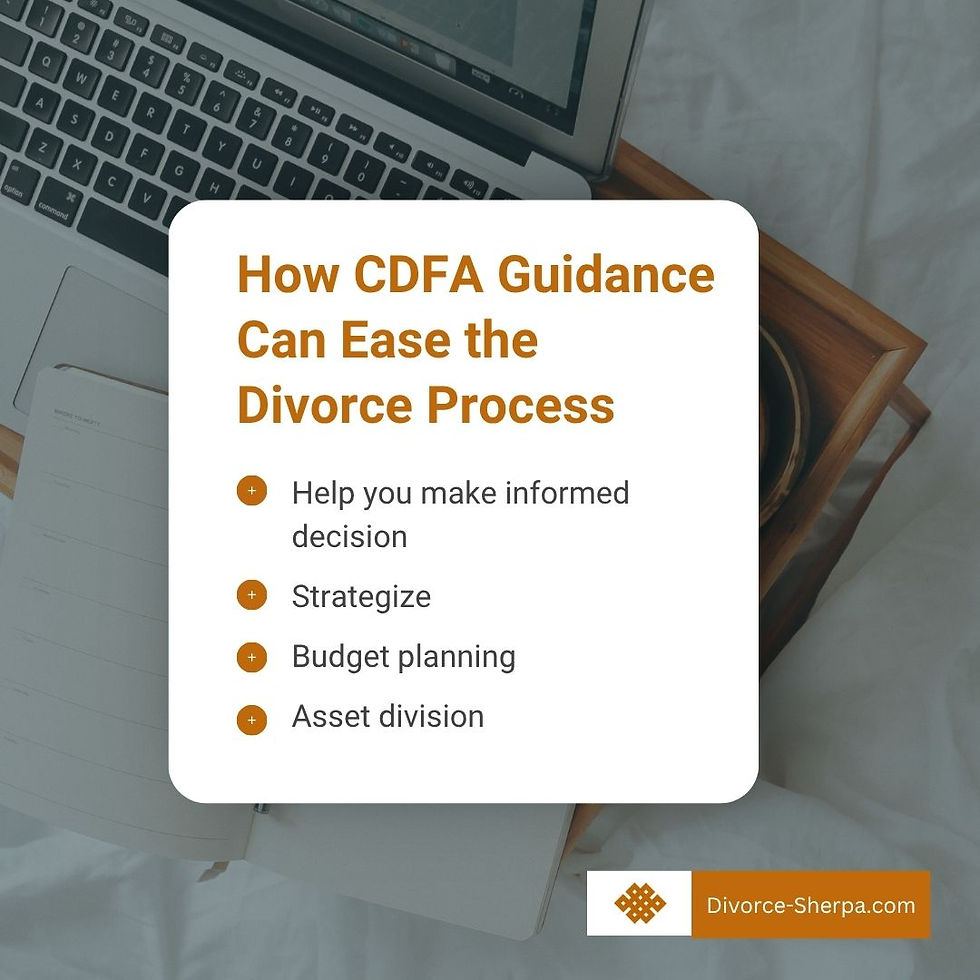
How Financial Guidance Can Ease the Divorce Process
Divorce is not just an emotional journey; it’s a financial one too. Managing money, assets, and budgets can feel overwhelming, but you don’t have to do it alone.
Certified Divorce Financial Analyst (CDFA): A CDFA helps you understand the financial impact of divorce. They analyze assets, debts, and future expenses to create a clear picture.
Budget planning: Knowing what you can afford post-divorce is crucial. A financial consultant can help you build a realistic budget.
Asset division: Dividing property and investments fairly requires expertise. A financial neutral can guide you through this process without bias.
Co-mediation and collaborative divorce: These respectful approaches focus on cooperation rather than conflict, often saving time and sometimes money.
Taking control of your finances during divorce can reduce stress and empower you to make informed decisions. It’s about building a secure foundation for your new life.

Taking Care of Yourself During Divorce
Divorce can feel isolating, but you are not alone. Taking care of your emotional and physical well-being is essential.
Seek support: Talk to trusted friends, family, or a counselor. Sharing your feelings can lighten the load.
Set boundaries: Protect your time and energy. It’s okay to say no to things that drain you.
Stay organized: Keep track of important documents, appointments, and financial information.
Focus on the future: Set small goals for yourself, whether it’s learning a new skill, exploring hobbies, or planning your next steps.
Remember, divorce is a process, not a single event. Be gentle with yourself and celebrate progress, no matter how small.
Moving Forward with Confidence and Clarity
Divorce marks the end of one chapter and the beginning of another. With the right support and information, you can navigate this transition with confidence.
Educate yourself: Understanding divorce rate trends and common challenges helps you feel prepared.
Get professional help: A Certified Divorce Financial Analyst, like Sophie Helenek, can guide you through financial and emotional complexities.
Plan for your future: Focus on building a stable, fulfilling life post-divorce.
Stay hopeful: Many find that divorce opens doors to personal growth and happiness.
If you are considering divorce or in the midst of it, know that help is available. You can create a new path that honors your needs and dreams.


Comments